Green Land Capital
India’s First Deeply Verified, Technology-Powered Farmland Ecosystem.
Project Concept Label
UI/UX Design • Website
Project Type

INTRODUCTION
Greenland Capital (GLC) is one of the most complex product design projects I've worked on. At first glance, it looked like a land listing platform, but as I dug deeper, I realized the real challenge wasn't selling land—it was managing the entire verification and governance ecosystem behind it. The platform involved multiple stakeholders including agents, screening teams, field officers, regional officers, intelligence teams, verification officers, administrators, and sales teams. Each role had different responsibilities, different goals, and different dependencies on one another. My task was to design a system that could bring all of these moving parts together into a single operational platform. The challenge wasn't just creating dashboards; it was designing a workflow that could support territory management, land verification, approvals, officer assignments, expansion planning, and performance tracking without overwhelming the people using it. This project pushed me beyond UI design and into systems thinking, workflow architecture, and enterprise product design.
DESIGNING METHOD
Before opening Figma, I spent a significant amount of time understanding how the business actually operated. The first thing I noticed was that every stakeholder described the process differently. Agents focused on submitting lands, officers focused on verification, leadership focused on growth, and sales teams focused on conversions. Everyone was looking at the same system from a different perspective. To make sense of it, I started mapping the entire operational journey—from the moment an agent discovers a piece of land to the point where that land is verified, published, and eventually sold. As the workflows became clearer, another challenge emerged: territory governance. Questions like who owns a region, what happens when boundaries change, how officer workloads are managed, or how new territories are created had no clear digital process. I began documenting edge cases, exception scenarios, and role dependencies to create a governance framework that could scale as the business expanded. Once the operational model was defined, I translated it into role-based experiences. Instead of creating a generic dashboard, every role received a workspace designed around the decisions they needed to make each day. Agents focused on submissions and commissions, verification teams focused on case progression, and administrators focused on performance, approvals, and business growth. The result was a platform that felt structured and intuitive despite the complexity happening behind the scenes.
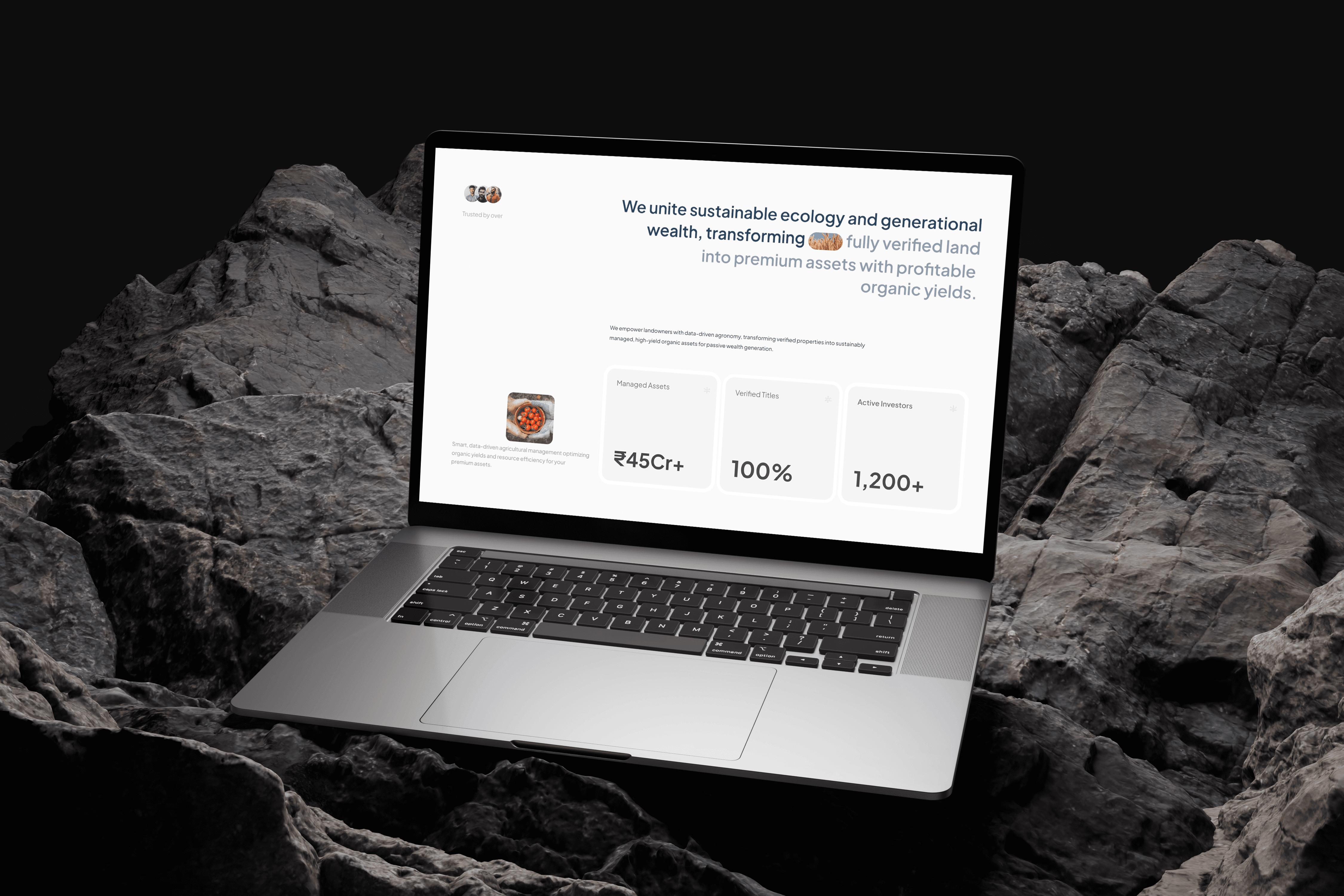

FINAL PERFORMANCE
The final solution became much more than a dashboard—it evolved into an operational command center for Greenland Capital. The platform introduced a structured verification framework where every land submission moved through multiple layers of validation before reaching the marketplace. This reduced ambiguity, improved accountability, and created clear ownership at every stage of the process. One of the most rewarding parts of the project was designing the territory governance system. Instead of treating regions and assignments as static data, the platform could now support expansion opportunities, officer reassignments, workload balancing, and exception handling through defined workflows. From a user experience perspective, the system transformed a highly manual and fragmented process into a centralized workflow that stakeholders could easily understand and manage. Every role had visibility into what mattered to them, while leadership gained a high-level view of operational performance, approvals, sales activity, and regional growth. By the end of the project, I had designed: • A complete end-to-end land verification ecosystem • Multiple role-based operational dashboards • A territory governance and assignment framework • A structured approval and escalation model • Expansion and exception management workflows • A scalable architecture capable of supporting future regional growth This project strengthened my ability to design complex enterprise systems and reinforced an important lesson: good product design isn't just about screens—it's about bringing clarity to complexity.

